"“We have lent a huge amount of money to the U.S. Of course we are concerned about the safety of our assets. To be honest, I am definitely a little worried.” "


Chinese premier Wen Jiabao 12th March 2009


""We have a financial system that is run by private shareholders, managed by private institutions, and we'd like to do our best to preserve that system."


Timothy Geithner US Secretary of the Treasury, previously President of the Federal Reserve Bank of New York.1/3/2009

Showing posts sorted by relevance for query vagit. Sort by date Show all posts

Sunday, March 18, 2007

Russian Roulette in the Middle East - Putin stirs up the hornet's nest


Lord Patel revealed the establishment of LUKSAR the Lukoil Saudi Arabia Energy company 80% owned by LUKOIL in March 2004 when my old friend Vagit signed the 40 year deal with Ali al-Naimi, who acting on behalf of the government.

This you will remember was after he signed a deal on March 11th 2004 in Baghdad to train Iraqi oil industry employees and students. 40 Iraqi students will study in Russia's I.M. Gubkin Oil and Gas University... which ,despite all the problems today still going.

Anyway Vagit tells me that he was back in Saudi last month, this time with President Putin (the 1st ever visit by a Russian leader) and stirring the ordure for Washington as usual, during the visit he signed a co-operation agreement with Qatar Petroleum's chairman Abdullah Bin Hamad Al-Attiyah covering possible participation in oil and gas projects including GTL, LNG and petrochemicals ventures.

Whilst that was going on Putin was offering Crown Prince and Defence Minister Prince Sultan bin Abdul Aziz nuclear power stations , military helicopters, to build rocket propelled grenade (RPG) factories, provide sophisticated anti-aircraft systems-the Carapace (Pantsyr), TOR M1 and Strelets. To top all that he offered the Saudis expanded satellite launches and an opportunity to join the Russian satellite navigation system, GLONASS.

Diplomatic gossip says there is a "verbal understanding" on the sale of about 150 Russian T-90 battle tanks to Saudi Arabia, which is seeking to diversify its defence systems.Tests were carried out on the T-90 in Saudi Arabia last year to determine the tank's suitability for harsh desert conditions, and Russia is also looking to sell Mi-17 helicopters.

Gas OPEC - the first steps

He also hinted about future logistical co-operation involving LNG supply swaps for each country's global gas customers. This is what anxious observers in the US call a new OPEC - and they don't like it. At present there is a loose association called the Gas Exporting Country Forum (GECF). This was founded in 2001 by Algeria, Iran and Russia also includes Libya, Qatar, Oman the UAE, Egypt, Bolivia, Indonesia, Malaysia, Trinidad and Tobago, Venezuela as well as Norway as an observer.

Of course anything that keeps up prices for oil and gas rich Russia is a good thing - also the implied anti British and anti U.S. presence in the Middle East by playing to anti-Western sentiment in the "street" and among the elites plays well. Mr. Putin also solidified the high profile diplomatic stance of ther new kremlin, emphasizing their differences with Washington.

To date this group has not attempted to control prices - which would require a change in a market which involves large, lengthy (40years in some) contracts. With LNG demand growing at 12% a year thins may change.

Anyway when the gas exporting countries meeting in Doha in April they will have the development of an OPEC-like group. This is anidea being forcefully put forward by Iran's oil minister Kazem Vazeri-Hamaneh and Iranian leader Ayatollah Ali Khameni has called for Russia and other natural gas producers to establish a gas cartel. Iran is looking for new customers in Europe and Swiss traders have been buying heavily to supply customers in Italy and eslewhere via Turkey.

Fellow Muslim state Malaysia's independent power developer SKS agreed a $16 billion, 25-year programme to exploit the Ferdos and Golshan offshore gas fields in south-eastern Iran with the the National Iranian Oil Company in January. ...a dn a Pakistan / Iran pipleine project is nearing agreement - despite pressure from Washington.

LUKoil developments in Rub Al-Khali

Anyway, Vagit says LUKSAR is still on target with development of the 30,000 sq. mile block in the northern part of the Rub Al-Khali (Empty Quarter) south of the giant Al-Ghawar oil field. The Rub' Al-Khali is the biggest active sand sea in the world (between 500,00 and 600,00 km2 - roughly the size of France).

Lukoil say that 15 months ago the first exploration well was spudded in the central area of the block and they expect to invest $2 billion to exploit the deposits found there and expect commercial production of gas and condensate by 2014.

Saudi Aramco will have the right to buy all the gas produced at $22.7 per 1,000 cubic metres if annual production reaches an agreed level. The next stage of development involves building pipelines and other infrastructure development

Gazprom's were kept busy on the trip and their engineering subsidiary Stroytransgaz had talks with Saudi Oger on possible collaboration for energy and water pipeline work in the Kingdom.

Vagit told me that , 'Lukoil views the Middle East as a region of high priority. The Saudi project perfectly fits in the company's development strategy and matches all economic and competitive criteria the company applies to projects.'

He went quiet when asked about Iraq and simply said he hopes to restore oil extraction rights agreed before Saddam's downfall in 1997 to the vast West Qurna-2 oilfield (industry estimates 15 Mn barrels). Talk in St Petersburg is of $4 billion being invested in the field through to 2020.

Meanwhile Vagit is having a very close look at Oman's promising Khazzan and Makarem gas fields which the Sultanate wants to develop...he also has been having a chat with Abdullah Nasser Hawaileel of some outfit called Dana gas who had a wildly oversunscribed IPO in 2005 in Abu Dhabi.

Algerian Salafist rebels adopt Al Quaeda role - bombings kill foreign workers

Mind you, Vagit reminds me , there are problems in dealing in these zones, a Russian engineer, 3 Ukrainians and three Algerians were killed and five other people wounded in the bomb attack on their bus on March 5th at Hayoun, near Ain Defla in southern Algeria.The bus was carrying employees of tStroytransgaz , who were laying gas mains between Ain Defla, in the region of Medea, and Tiaret, 340 kilometers southwest of Algiers.

The Salafist Group for Preaching and Combat (GSPC) has, since last September, taken on the name of Osama bin Laden's terror network for North Africa and they claimed responsibility for the attack.

"We dedicate this modest conquest to our Muslim brothers in Chechnya ... victims of the criminal (Russian President Vladimir) Putin," it said in the statement posted on an Islamist site often used by Al-Qaeda.

In December one person was killed and nine injured in an attack on a bus carrying staff of the Brown and Root Condor (BRC) company, a subsidiary of the Algerian Sonatrach oil company and Halliburton.

And all this, even when Putin to establish his credentials in the Muslim world had brought along with him to Saudi , Mintimir Shaimiyev, the Muslim head of the predominantly Muslim republic of Tatarstan. Tickled pink with this gesture, King Abdullah had responded in kind, and awarded Shaimiyev the King Faisal award for service to Islam, praising Putin as , "a statesman, a man of peace, and a man of justice" despite Putin's brutal treatment of the Chechen Muslims.

Russia and Algeria, recently signed an agrement to coordinate investment and marketing and the transfer of technology - then they get their buses and workers bombed . No wonder Vagit sighed and headed for the casino.

Look out - the Russkis are back . Back in business.


Tuesday, September 02, 2008

Mr Putin visits that nice Mr Karimov for a chat about this and that and oil and gas and pipelines

Whilst problems rise in Ingushetia ,Vagit Alekperov called to tell us of his trip alongside Prime Minister of Russia, Vladimir Putin, to Uzbekistan yesterday. They were met personally at the start of their 2 day visit yesterday at Tashkent International Airport by "boil in bag" Islam Karimov himself.

Vagit tells us that Head of the Russian Government Mr Medvedev was dragged along in the wake , as were the Chairman of the Board of Gazprom, Aleksey Miller, and the Head of the United Aircraft Construction Corporation, Aleksey Fedorov, and also the representatives of some other big noises from the St Petersburg mafia.

In return for paying "European" prices for Uzbek gas Putin hopes to get Karimov to agree to keep US bases off his soil.

This high powered delegation also wants to get back on track the deals sought during the meetings last week between Russia’s Vice Premier Sergei Ivanov and Uzbek First Vice Premier Rustam Azimov including privatising / stealing certain hydroelectric power stations that are of interest to Anatoly Chubais's - Inter RAO/UAS who had tagged along. They also want to re-visit the stalled plans for a merger/joint venture of Russia’s Stroitransgaz and Mubarek GPZ .

Karimov however wants to cash in on a window of new found acceptance of his mass slaughter of civilians at Andijan so is, as usual playing both ends against the middle.

Vagit tells us that Moscow will offer long-term contracts for all Uzbek gas (with a modest commission for Mr Karimov and his extended family) . Uzbekistan produces 60 billion cu meters of gas a year, and gazprom takes probably 7/8 Bn. cu meters .

Russia was paying US$130/per thousand cu meters in the first half-year, but the price went up to US$160/ths cu meters in the second half.

The big idea is however to get Karimov to sign up for a new pipeline to Russia,boosting annual capacity of Central Asia-Center facilities from 45 billion cu meters to between 80 /90 billion cu meters.

All this must be seeen in the context of Russia's long term plans : -

Currently , the total volume of Russian investments in the oil and gas sectors in the countries of Central Asia is US$4-5 Bn. Most (US$3-4 Bn.) > 80% is concentrated in Kazakhstan the share in Uzbekistan is smaller > US$1 BN and even less in Turkmenistan, Tajikistan and Kyrgyzstan maybe US$50 Mn.

Russian companies (and this is where Vagit gets involved) aim to invest approximately between US$ 14-16 Bn over the next five years (ish) mainly in the search for and development of oil and natural gas fields throughout Central Asia, but also in the pipeline infrastructure of the region. By 2012, Russia proposes investing US$ 4.7 to 6.2 Bn. into the oil and gas sectors of Uzbekistan on geological surveys and opening of oil and gas fields projects as well as upgrading the pipeline infrastructure.

The appeal of Central Asia to Russia is that extraction of hydrocarbons in the region is technically simpler and initially economically more advantageous than in the north of Russia where the overwhelming majority of Russian oil and gas fields are now concentrated.

Russia wants (needs) to bring as large a part as possible of the hydrocarbon resources of Central Asia into its own fuel-energy balances in order to support internal consumption, without simultaneously lowering the volumes of its own hydrocarbon exports to external markets - first and foremost to Europe.

Therefore this trip is very important, and perhaps the events in Georgia are meant as a reminder to Mr Karimov that Mr Putin can play hard ball when required.

PS : On this note Vagit did say that although LUKOIL, with four refineries in Russia, one in Ukraine, one in Bulgaria and one in Romania. LUKOIL, and has more operations abroad than any other Russian oil firm is worried that the Georgian trip may cause problems - especially the 49 % of ERG SpA's Isab di Priolo refinery in Sicily recently.

Oil closed at US$104.

Wednesday, May 25, 2005

LUKOIL & Conoco Philips set to exploit Iraq oilfields

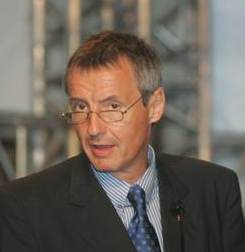
Exploitation of Iraqi oil fields has taken 3 years since the invasion. Now after much backstage wrangling the players (No 1 Vagit Alekperov see pic )are making their moves with the new Shia dominated Gubment. The Russian energy companyLUKOIL, the 20th biggest oil company in the world, has Mr Meyer of Conoco Philips on the board, they also never closed their office in Baghdad. LUKOIL is planning to start joint exploration of the West Qurna-2 oil deposit in Iraq with U.S. company ConocoPhillips (they have a 17.7% stake), LUKOIL President Vagit Alekperov announced Tuesday. CP took a stake in LUKOIL last September which they want to raise to 20%.

This deposit has estimated recoverable resources (according to Cambridge Energy Research Associates) at 11.3 billion barrels and is third biggest in Iraq.

"All conditions have currently been met in Iraq that are needed to start project implementation," Alekperov said. "In the near future, LUKOIL Overseas head Andrei Kuzyaev will fly to Baghdad and at the end of the year I might go there as well."

Alekperov is certain the Iraqi side sees the project's validity and assumes that Baghdad will not demand the revision of existing agreements.

Alekperov told journalists that the American company would participate in the exploration of the Iraqi deposit.

LUKOIL also plans to join efforts with ConocoPhillips on the U.S. market. After a visit last week by Vagit Alekperov to meet President Chavez LUKOIL will conduct exploration of Venezuelan oil deposits and produce oil that will be supplied later to U.S. refineries that belong to ConocoPhillips. The resulting oil derivatives will be sold at the more than 2,000 (ex Getty Oil) U.S.-based gas stations that belong to LUKOIL.

LUKOIL will also reduce oil supplies in the East. According to Alekperov, if the company had planned to supply three million tons of oil to China this year, it now is assuming the supply volume will not exceed two million tons this will free rail space for state-owned Rosneft, Interfax reports. Rosneft will supply China with 10 million tons of oil this year via national rail monopoly Russian Railways.

Lukoil produced 81.5 million tons of oil and 5.5 billion cubic meters of gas in 2003. According to Energy Intelligence Group. Their reserves are said to exceed those of Exxon. Vagit Yusopovitch Alekperov was born in Baku, Azerbaijan in 1950. His nicknames, "the General," "Alek the First" and "the Don," are indicative of his indisputable authority at LUKoil, whose name came from the first letters of the three companies that consolidated-- Langepas, Urai and Kogalym. Today LUKoil is among the world's most powerful oil companies,

In March 2004 , LUKOIL's chief executive Vagit Alekperov met Iraq's Oil Minister Ibrahim Bahr al-Ulum who has said that oil companies of different countries should do business in Iraq. According to him, talks with LUKOILl were held in December 2003. During their March 11th meeting in Baghdad, they signed a deal to train Iraqi oil industry employees and students. 40 Iraqi students will study in Russia's I.M. Gubkin Oil and Gas University. Their numbers were due to increase to 100 students in 2005.

Mr. Alekperov has moved into banking and the media. He and Lukoil control the Imperial Bank, several television stations and the newspaper Izvestiya.

For more information see

Oil is not well in Iraq Edward Teague

Thursday, March 27, 2008

LUKoil revive and seal a deal with Maliki and Talibani for Western Qurna-2 field - Russia writes off US$12 Bn debt to Saddam

We have many times referred to the contacts and connections between our old friend Vagit Alekperov and the Iraqi oil industry. Well just as the major US oilcos are signing "technical" agreements, Vagit calls to tell us he is in Baghdad cutting a deal for reviving the LUKoil's contract for Iraq's Western Qurna-2 field. West Qurna-2 field is one of the biggest in the world with the proven reserves of above 800 million tons of oil (6 billion barrels), according to LUKOIL.

Current estimates he tells us, involve a US $4 billion project with annual earnings from oil production at $21 billion. The Western Qurna-2 field should have been developed under a production sharing contract (PSC), an agreement on which was signed with beastly old Saddam in 1997 but was frozen in 2002.

Vagit tells us he was accompanied by the Russian Deputy Foreign Minister Alexander Saltanov and got to see Maliki and Jalal Talibani - which must have pissed off a few folks in the green Zone.

The presence of Saltanov ( a champion chess player) was a help to get a US$12 Bn Iraqi debt written off - which means nothing because they were never, ever going to collect. Clinching the deal was an agrement to make future investments of US$4 Bn. in the Iraqi oil and gas sector.... some of which no doubt "evaporated".

Of course 19% shareholders in LUKoil ConocoPhillips (with Mr Richard Armitage **** the signer of the PNAC and the man who told Mushariff that the US would bomb Pakistan into the stone age unless he behaved, as a Director) should / will receive a 17.5% stake in the Iraqi contract under their strategic partnership agreement with LUKoil.(The contract for production and development of the second stage of West Qurna-2 project was inked March 21, 1997 with LUKOIL having 68 percent in it. Once LUKOIL and ConocoPhillips became the strategic partners in 2004, LUKOIL undertook to transfer 17.5 percent to the U.S. company. )

Russia’s Zarubezhneft and Mashinoimport hold another 3.25 % in the project.

Western Qurna-2 field is unique. Oil lies near the surface , easy and low cost to extract - estimates are of the order of 30 million metric tons of high quality oil.(1 metric ton of crude oil = appr. 7.3 barrels of crude oil ...)

With oil price at US$730 per ton, ( approx US$100 pb) annual earnings from oil sales could easily gross US $21 billion.

Last year, LUKoil produced 96 million metric tons of oil.

**** Richard Armitage is also a director of ManTech International Corp. is an information technology company that does most of its work for the military, intelligence and homeland security agencies about whom Kate has such warm feelings. 95 % of their income comes from contracts with the Defense and Homeland Security departments and U.S. intelligence agencies.

Mantech still show Eugene C. Renzi as Senior EVP (died of cancer February 9, 2008 ) who is the daddy of Arizona Representative Ricky Renzi. newly indicted on, 35 counts of extortion,conspiracy, money laundering and related charges. He was on the House Intelligence Committee until FBI agents descended on his family business.,

Richard Armitage was one of the main architects behind US covert support to the Mujahedin and the "militant Islamic base," both during the Afghan-Soviet war as well as in its aftermath.

PS: Friday - Hit me between the eyes, Doh! For writing off a notional US$12 Bn. the Russians get the best , known, shallowest big oil field left to exploit - the US oilcos (whose tax payers have squandered 100's of US$ Bns) get 2 years "technical" studies. Now that is what in St. Petersburg they call a bargain.

Do a Google News search on Western Qurna-2 field a single hit on a Russian news agency. This afternoon Reuters reported "Iraq field could be worth $7bln to LUKOIL-JPMorgan" but provides no details and simply reports J P Morgan's research note.

This is massive news in the context of the post war development of Iraq - probably the most significant since the illegal invasion. See "22/03/04 Oil is not well in Iraq "I'n'I... "Last week, 15/3/04 - LUKOIL's chief executive Vagit Alekperov met Iraq's Oil Minister Ibrahim Bahr al-Ulum who has said that oil companies of different countries should do business in Iraq. According to him, talks with LUKoil were held in December 2003. During their March 11th meeting in Baghdad, they signed a deal to train Iraqi oil industry employees and students. 40 Iraqi students will study in Russia's I.M. Gubkin Oil and Gas University. Their numbers will increase to 100 students in 2005."

Tuesday, August 19, 2008

Iraq non compete , short term, unprofitable, oil "technical support" deals with oil majors fall apart as Vagit watches and waits

We told how our friend Vagit Alekperov was accompanied by the chess playing Russian Deputy Foreign Minister Alexander Saltanov and got to see President al-Maliki and Jalal Talibani to make "good business" .. the result of years of patient persuasion by Vagit. Thursday, March 27, 2008 LUKoil revive and seal a deal with Maliki and Talibani for Western Qurna-2 field - Russia writes off US$12 Bn debt to Saddam see also for a little history 22/03/04 Oil is not well in Iraq "I'n'I...

"Last week, 15/3/04 - LUKOIL's chief executive Vagit Alekperov met Iraq's Oil Minister Ibrahim Bahr al-Ulum who has said that oil companies of different countries should do business in Iraq. According to him, talks with LUKoil were held in December 2003. During their March 11th meeting in Baghdad, they signed a deal to train Iraqi oil industry employees and students. 40 Iraqi students will study in Russia's I.M. Gubkin Oil and Gas University. Their numbers will increase to 100 students in 2005."

Things however got a bit clouded in March this year when it became apparent that al-Maliki was also negotiating six no-bid, short-term technical support contracts with international oil firms, worth about $500 million each, aimed at quickly boosting production by a combined 500,000 barrels a day.

These were supposed to be the 1st Phase for developing the industry and should have been signed by now with Royal Dutch Shell , Shell in partnership with BHP Billiton , BP , Exxon Mobil Chevron and Total plus a consortium of smaller firms Anadarko with Vitol and Dome (already active in Kurdistan North Iraq) .

Just by the by, in 1995 Vitol signed a deal with a Serbian company, Orion, to sell thousands of tonnes of oil to the former Yugoslavia. Senior Tory Alan Duncan was a consultant with Vitol when they paid $1 million to the Serbian war criminal Arkan to settle a score over a secret oil deal to supply Slobodan Milosevic's Serbia with fuel. see Chris Paul Monday, July 21, 2008 Breaking News: Karadzic Captured, Arkan-Vitol-Duncan

More by the by , Vitol pleaded guilty in November 2007 to a larceny charge in connection with a scheme to pay secret kickbacks to the Iraqi government in exchange for oil under the United Nations'oil-for-food(OFF) .Vitol agreed to pay restitution of US$13 million (€8.8 million) to the Development Fund for Iraq and to make a payment of US$4.5 million (€3 million) to the city and state of New York.

At the same time Chevron Corp. also agreed to pay US$30 million (€20.2 million) to settle civil and criminal charges related to secret surcharges paid by third-party merchants in exchange for oil under the program.

Now surprise, surprise , today, Charles Ries, coordinator for Iraq's economic transition at the U.S. embassysince last July says that the Iraq Government on present form probably won't proceed with most of these deals or even all of them. Charles said on July 17th at a junket in Abu Dhabi .."Developing Iraq’s economy depends on unlocking the potential of its petroleum sector, which currently accounts for nearly 70 percent of Iraq’s gross domestic product and 85 percent of government revenues. " Quick of him to notice.

Ries is on record saying that Anadarko and some of its partners have already walked away from talks over their deal, the first to apparently fall through.

He apparently says to anyone listening that the oil majors were at best lukewarm to the idea of the short-term contracts which "were never going to be hugely lucrative," but some had been pursuing them in the hope of building a long-term relationship with Iraq's Oil Ministry.

Thursday, April 27, 2006

Major oilcos reveal massive profits - the dividends of war

ConocoPhillips' net income jumped to US$3.29 billion, or US$2.34 per share (17%) for 1Q 2006 from US$2.91 billion, or US$2.05 per share last year.

Revenue at ConocoPhillips in Q1 2006 grew 23% US$47.9 billion in the first quarter from US$38.9 billion last year. The company said higher oil prices were partially tempered by lower natural gas prices compared with the fourth quarter.

Their investment in LUKoil will of course be generating healthy income. (read here about LUKoil and Conoco in Iraq) LUKoil announced yesterday it is looking to raise current crude production levels in Kazakhstan by 40% by 2010. Vagit Alekperov said the company's investments in Kazakhstan by 2010 would stand at $300 million per year, or $1.5 billion over the next five years.

LUKoil President Vagit Alekperov told me from Astana yesterday ... "The total volume of crude oil production [in Kazakhstan] is expected to reach six million tons [120,493 bbl/d] in 2006, and the company plans to reach 10 million tons [200,821 bbl/d] by 2010," LUKoil President Vagit Alekperov said.

LUKoil and Kazakhstan's state oil company KazMunaiGaz are also jointly developing Khvalynsk and Tsentralnoye oil deposits on the Caspian Sea shelf on a parity basis.

Tomorrow Exxon/Mobil is projected to announce more than US$9 billion in profits for 1Q 2006— and Chevron is expected to announce profits close to US$4 Bn.

Senator Chuck Schumer, D-N.Y., said big oil companies are the culprits behind runaway gas prices which he says go "way beyond what supply and demand would merit."

He said Mr. Bush refuses to "get tough on big oil."

Crude oil and gasoline futures fell a little after Mr. Bush gave the Environmental Protection Agency the authority to relax regional clean-fuel standards to attract more imports of gasoline to the United States and to make it easier for supplies to be moved from one state to another.

Clean Air ? Who gives a shit says the Texan facing mid term elections , let those oil guys who pay the election expenses sell even more gas.

Pic (US$2.53) You wish, UK prices nudging £1 a gallon (UK gall =4.6 litres US gallon =3.74 litres.

Major oilcos reveal massive profits - the dividends of war

ConocoPhillips' net income jumped to US$3.29 billion, or US$2.34 per share (17%) for 1Q 2006 from US$2.91 billion, or US$2.05 per share last year.

Revenue at ConocoPhillips in Q1 2006 grew 23% US$47.9 billion in the first quarter from US$38.9 billion last year. The company said higher oil prices were partially tempered by lower natural gas prices compared with the fourth quarter.

Their investment in LUKoil will of course be generating healthy income. LUKoil announced yesterday it is looking to raise current crude production levels in Kazakhstan by 40% by 2010. Vagit Alekperov said the company's investments in Kazakhstan by 2010 would stand at $300 million per year, or $1.5 billion over the next five years.

LUKoil President Vagit Alekperov told me from Astana yesterday ... "The total volume of crude oil production [in Kazakhstan] is expected to reach six million tons [120,493 bbl/d] in 2006, and the company plans to reach 10 million tons [200,821 bbl/d] by 2010," LUKoil President Vagit Alekperov said.

LUKoil and Kazakhstan's state oil company KazMunaiGaz are also jointly developing Khvalynsk and Tsentralnoye oil deposits on the Caspian Sea shelf on a parity basis.

Tomorrow Exxon/Mobil is projected to announce more than US$9 billion in profits for 1Q 2006— and Chevron is expected to announce profits close to US$4 Bn.

Senator Chuck Schumer, D-N.Y., said big oil companies are the culprits behind runaway gas prices which he says go "way beyond what supply and demand would merit."

He said Mr. Bush refuses to "get tough on big oil."

Crude oil and gasoline futures fell a little after Mr. Bush gave the Environmental Protection Agency the authority to relax regional clean-fuel standards to attract more imports of gasoline to the United States and to make it easier for supplies to be moved from one state to another.

Clean Air ? Who gives a shit says the Texan facing mid term elections , let those oil guys who pay the election expenses sell even more gas.

Pic (US$2.53) You wish, UK prices nudging £1 a gallon (UK gall =4.6 litres US gallon =3.74 litres.

Monday, December 24, 2007

Gazprom pays more for gas from Turkmenistan, Kazakhstani - Uzbekistan to follow ? Putin agrees to foil US /EU plans for Trans Caspian pipeline

In 2004 , in the wake of the Andijan masacres President Putin visited Tashkent and as a result LUKoil signed a 35-year agreement for more than 200 bln cubic metres of gas which is to be extracted from three gas fields in the southern Bukhara region of Uzbekistan and one in the north of the country.

Russian First Deputy Prime Minister Sergei Ivanov , Lukoil OAO president Vagit Alekperov, was officiating last month at the launch ceremony of four gas fields by a joint venture controlled 90 pct by LUKoil and 10 pct by the Uzbek government. Ivanov said Uzbekistan should not let any countries other than Russia exploit its gas reserves.

Speaking at the inauguration of the vast Khauzak gas field, Ivanov said: 'Russian companies such as Lukoil respect the environmental criteria, unlike foreign companies operating in Russia. Why give companies from outside Russia the opportunity to make money?'

More than 200 bln cubic metres of gas is to be extracted from three gas fields in the southern Bukhara region and one in the north of the country.

This is the first production-sharing agreement in Uzbekistan, a country largely closed to foreign investors that has significant gas reserves and infrastructure dating from the Soviet era, to come on stream.

Chairman of LUKoil, Vagit Alekperov said 'For the first time, today, our company is autonomously operating a gas field, while until now Lukoil was considered an oil company.'

In total, Lukoil plans to invest about 3 bln usd in the project, which is expected to reach peak annual production of 11 bln cubic metres of gas in 2012 or 2013. To date activities aimed at drilling over 160 production wells and constructing over 1,500 km of pipelines, 40 km of railways and a gas processing plant with a capacity of over 8 bln cu m of gas per annum are to be implemented as part of Kandym -Khauzak -Shady -Kungrad project. To date over US$ 350 mln (over US$ 300 mln for Khausak gas field development) have been invested into Uzbekistan’s economy in work related to the project.

Uzbekistan, produced about 60 bln cubic metres of gas in 2006, of which 12 bln were exported.

Following an announcement that the state-controlled Gazprom would pay up to 50 percent more for natural gas imports from Turkmenistan, Kazakhstani officials announced December 5 they too intended to jack up the price of gas exports by roughly 36 percent. Russia seems ready to agree to the new Kazakhstani price of $190 per 1,000 cubic meters.

Days laterUzbekistan followed suit , with a source in the state energy company Uzbekneftegaz saying Uzbekistan also wanted to be paid more than the current $100 per 1,000 cubic meters.

"World prices are rising, the dollar is weakening. It's only logical that [Uzbek] gas prices should rise," the source said. "The question is by how much. But that is something to be discussed behind closed doors."


Moscow sees paying higher prices as part of the cost of maintaining its stranglehold over energy routes from the Caspian. Over the past year, Turkmenistan and Kazakhstan have both publicly expressed a desire to join a US-backed project known as the Trans-Caspian Pipeline project (TCP), which would allow the Central Asian states to link to Azerbaijan’s Westward-bound pipelines and, therefore, avoid Russia as an energy-export middleman (and the abilty to ibterfere with supplies to Europe) . Keeping the Central Asian leaders remain happy, and preventing them from making any firm commitment to TCP’s construction, is currently one of the Kremlin’s top foreign policy priorities.

Vagit Alekperov , head of LUKoil, paid a December 6 courtesy call to Astana to have a chat with Nazarbayev - reminding him that LUKoil has invested roughly $1.5 billion in various projects in Kazakhstan and that LUKoil would start drilling in the Tsentralnoye field in the northern Caspian as soon as this month.

To secure energy resources in the region the Russian strategy is to maintain its regional energy dominance with the Prikaspiisky Pipeline project, on which Russia, Turkmenistan and Kazakhstan reached agreement in principle last May - which has stalled currently.

Putin, along with Turkmen leader Gurbanguly Berdymukhammedov ( successor to dictator Saparmurat Niyazov) and Kazakhstani President Nursultan Nazarbayev, were expected to sign a formal agreement on the pipeline upgrade in September

The deal would expand a spur of the pipeline network linking Turkmenistan and Russia, known as Central Asia-Center. Nazarbayev is involved because the so-called Prikaspiisky spur travels across a section of Kazakhstani territory. At present the Prikaspiisky route is capable of handling a relatively small amount of natural gas, about 5 million cubic meters per day. The deal outlined by Putin envisions a large expansion of the spur’s capacity, up to an additional 20 billion cubic meters (bcm) by 2012.

The deal, when (and if) completed, would appear to lock up the bulk of Turkmenistan’s gas production for export via Russia. Under an existing agreement, Turkmenistan is due to supply Gazprom with 60 bcm of gas in 2007 and up to 70 bcm in 2008. The deal between Ashgabat and Gazprom runs through to 2028.

Since the death of Saparmurat Niyazov , the United States, European Union and Azerbaijan have lobbied his successor, Berdymukhammedov, to commit to a trans-Caspian pipeline (TCP) that would circumvent Russia. However success of the Prikaspiisky pipeline’s export projections, as well as its other commitment to Russia and China, means that there would be there would be little gas left over from Turkmenistan to make a TCP route viable or profitable.

(At the end of the 1,760-kilometer-long US funded Baku-Tbilisi-Ceyhan pipeline, pushed through by Clinton in the shadow of Turkey’s gleaming Ceyhan oil terminal, the village of Golovasi, previously revolved around fishing in the nearby Mediterranean Sea, but the arrival of the BTC pipeline effectively put an end to that. See more here With catches growing smaller, dozens of fishermen in the nearby village of Deveci Usagi have instead found jobs working for American military subcontractors in Iraq.)

The corrupt, ex soviet leaders of the CSU states play along with Putin - but cannily keep their options alive with Uncle Sam.

Watch this space.

One thing is certain - Lord King is absolutely fucking wrong, energy prices in the UK and EU are not going to go down, they are going to rise, and supplies become more difficult to contract for.... feeding inflation.

PS US Energy Information Adminstration (EIA maps of the pipelines in the region here
Central ASia briefing with manyn links to further information here

Sunday, November 19, 2006

Gazprom / LUKoil - Russian energy gets to grips with Europe

The prospects for EU energy security begin to look even more fractured. Russian State controlled Gazprom is rapidly becoming dominant in the EU, by combining its natural gas supply position (25% of EU curent demand) with an ever growing downstream market position in Europe’s main markets. This puts Moscow / St. Petersburg control where the more alert Europeans don’t want it to be.

After the supply problems to Ukraine in January and resultant problem with pressure and reduced supply elsewhere in Europe, Austrian Energy Minister Martin Bartenstein (pic) said in May that Russian gas would remain the backbone of the European energy supply mix but ....:

"We have to think about energy supply security in general, gas supply security... and we have to learn the lessons."
See 30 min OPEC video 12/9/06 ""Challenges to Energy Policies: The Case of Europe" by M
Bartentstein.

Gazprom and CEO of ENI, Paolo Scaroni,
have just announced an agreement with Italian oil and gas major ENI [NYSE:ENI] to enter the Italian domestic market with the prospect of supply up to 3 Bn. cubic metres per year to Italy from 2010 onwards, with an estimated value of $770-$963 million per year. Gazprom sells around 21 billion cubic meters of gas per year to Italy - equivalent to around a third of its gas imports and 29% of total consumption.

This has 3 consequences ;

1. Gazprom will be selling directly to Italian domestic consumers
2. ENI will become Gazprom's largest gas customer
3. ENI / Gazprom will build a 2nd Bluestream Russia - Turkey pipeline, to supplement the one they built and inaugurated in 2005.

The head of the Anti Trust Authority in Italy, Antonio Catricala has criticised what he sees as an anti-competitive arrangement. A previous deal was blocked in March 2005 (under the previous Gubment) by regulators who said it would "curtail the development of competitive intensity in the market." It is thought however that last winter's supply problems and the events in Ukraine and Georgia will concentrate minds on the realities of supply rather than notions of competitiveness before the planned LNG supplies are up and running.

Italy has only one LNG terminal operating but they are the 3rd largest LNG market in Europe and currently have several new LNG reception terminals in progress. Construction has commenced at Rovigo in the Adriatic and other projects at Brindisi, Porto Empedocle, Tuscany, Rosignano, Gioia Tauro, Taranto and two at Trieste are in various stages of planning, authorization or preliminary construction.

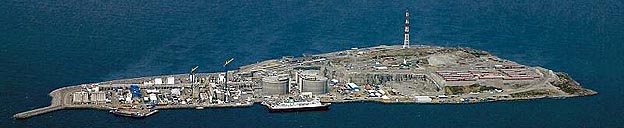
Gazprom are building their its first LNG export project by 2009 at Ust Luga, outside St Petersburg. Gazprom are also involved in the amazing Norwegian Statoil Snoehvit LNG export project on Melkoya Island outside Hammerfest.(pic)


Gazprom already has a 50% equity stake in German utility Wingas which was agreed in April with a complicated asset swap where Gazprom has traded some of its upstream assets in the Siberain gas field, Yuzhno Russkoye for the Wingas domestic retail and distribution market.

Gazprom have also had talks
with the Meeuse / Rhine combine with the newly established Trianel European Energy Trading GMBH and Trianel Gas Storage Association GMBH.

Ruhrgas has a 5% stake in Gazprom. Ruhrgas is

German energy giant E.ON have also agreed to take up a 25% minus one share stake in Yuzhno Russkoye, and in return Gazprom is receiving minority interests of 50% minus one share in Hungarian gas companies E.ON Foldgaz Trade and a 25% stake in the regional power and gas supplier E.ON Hungaria.

The Russian gas giant has now taken a stake in Amorim Energia, which owns 33.34% of newly floated (30/10/06 - raising US$1.1 Bn for the Portuguese state) Galp Energia [Lisbon:GALP] the privatised ex state energy company which is itself 33% owned by ENI. Amorim Energia is owned by Portuguese businessman Americo Amorim and Angolan oil company Sonangol. Diario Economico (Daily Portuguese paper) has reported Americo Amorim, and Manuel Ferreira de Oliveira, Galp chief operating officer, went to London yesterday (18/11) to sign an agreement with Gazprom. Part of the deal involves the supply of gas to GALP by Gazprom.

Gazprom have also let it be known they are looking for expanding downstream in Belgium and have been having discussions with gas distributor Fluxsys exploring underground gas storage
possibilities within Belgium at Poederlee in La Campine.

Gazprom is one of the companies which own the Interconnector pipeline linking Belgium and the UK.

Gazprom acquired the small (12 employees) Pennine Natural Gas (PNG) in June this year to gain a foothold in the UK retail market. There is continuing speculation that they have set their sites on acquiring Centrica and have made no scret that they plan to supply 20% of the UK market.

Several other deals in Europe are known to be cooking - and LUKoil have repeatedly stated and make no secret of their intentions of expanding withing Europe.

The energy world is however full of reports that a supply crunch is looming in Russia before even 2010. Claude Mandil, head of the International Energy Agency, said in may "We are afraid that Gazprom will not have, in the coming years, enough gas to supply even their existing customers and existing contracts .This is our data, Gazprom is not investing enough."

The Russian policy of divide and rule by dealing with each nation seperately - for example the
Baltic sea pipeline to supply the UK , Holland and Germany, negotiated in Chancellor Schroeder's dying days by Putin - construction of the Russian end of which has commenced. Supply contracts are also said to be in place with German and Dutch operators such as Gasunie.

All this flies in the face of Brussels policy who want Russia to ratify an "energy charter treaty" that would provide access to Russia’s reserves and remove Gazprom’s monopoly of the export pipeline to Europe. A point the Polish government , with long experience of Russian deal making (42% of their gas is supplied by Gazprom) are demanding as a prior condition to any further EU / Russian energy supply busines agreements.

Financing these and further deals said to be on the way is not a problem . Gazprom , assisted by
Credit Suisse and UBS placed 2 tranches of Eurobonds for $1.35 billion (US$ denominated) and
500 million euros both maturing in 2017 under the euro medium term notes (EMTN) program worth US $15 billion.

Within Russia, Vagit Alekperov CEO of LUKoil [LSE:LKOR] is complaining as they have had to
lose majority control of a planned joint venture in Russia to Gazprom. Lukoil claims still to be in
control of its existing oil field, but Gazprom’s state backed control has only increased further.

However last year LUKoil's natural gas production soared 265% to 5.1 Bn. cubic meters, after LUKoil brought its Nakhodkinskoye field on line last year, on top of being Russias largest oil producer and had total sales in 2005 of US$55Bn. up from US$33Bn. in 2004. Lukoil's sales network covers 17 countries, including the USA where they purchased 200 gas stations from Getty and Mobil in May to add to 795 gas stations bought from Conoco Philips (who have a substantial 7.6% stake in LUKoil) in New Jersey and Pennsylvania.


LUKOIL CEO Vagit Alekperov said in June that they were thinking about the purchase of Coryton refinery from BP. BP’s last UK refinery, Coryton, accounts for 8 percent of all refining in the country (around 8.6 million tons a year). Coryton produces diesel fuel, automobile fuel and aviation fuel, as well as the liquefied petroleum gas and bitumen. The petrol goes to BP’s fuel stations.

Contrary to BP (esentially now a US company) which is disposing of refining assets, LUKOIL’s policy is to buy refineries , and especially in Europe. In the recent months, for instance, globe trotting jet setter, Vagit Alekperov has had talks about acquiring Slovenian Nafta Lendava,
Oilinvest (Netherlands) B.V. Group (actually State owned by Libya) who operate as Tamoil in Europe and Africa (and sponsor Juventus for €110 million - Gadaffi's son has a 7.5% stake in the club) - although on 1st October it was announced that the shady Carlyle Group had bought Tamoil for US$3Bn. , a Rotterdam refinery owned by Kuwait Petroleum, Serbian state owned Naftna Industrija Srbije which Merrill Lynch are busily privatising, and is discussing building a refinery in Turkey.

Sunday, July 01, 2007

blinkx - brilliant dedicated video search engine

Spun out of Autonomy, by developing a video search engine based on technology that was conceived at Cambridge University, enhanced by $150M in R&D over 12 years and protected by 111 patents, blinx was founded in 2004 by Suranga Chandratillake and operates in the UK and California.

blinkx’s video search engine has a competitive (and unique) advantage by using speech recognition to analyse and identify the component of the video content. Searching is then based on both phonetic and text transcripts to match content with search queries.

Microsoft signed up to use it on October 2006, for parts of MSN and Live.com Lycos, Infospace and parts of AOL are also licencsed users of the technology.

On June 3rd it announced it was also powering video search on Ask.com and then on June 22nd it was announced Realplayer's next version would incorporate the engine

They have also this week launched AdHoc, the first " contextually relevant video advertising platform" . As Google’s AdSense provides textually related ads on the "Text Web", blinkx’s AdHoc platform will (they say in their press release) "revolutionize video advertising by matching compelling, customized, TV-style ads to your audience on the Video Web."
http://www.blinkx.com/news?type=&id=409


They launched on AIM in May 2007 at 45p and ran up during the day by 40% to 62 pence.LSE: BLNX but than rapidly ran back down in days and closed on Friday at 43.5 p.

Their website claims ...

Today, blinkx is the world’s largest single index of rich media content on the
Web, delivering more content from a broader range of sources than either Google
or Yahoo!
In use , retrieval is fast - although type slowly for the search text box - Vagit Alekperov was truncated to Vagit Alkperov - returning the same results for this Russian Oligarch and CEO of LUKoil, but impressively with a query on the spelling.

"Glasgow Bomb" returned 59 results, "USS Liberty " = 57 and "Tesla" - 1,920

The site is a model for clarity, ease of use, uncluttered simplicity and speed - the momwentary delay in inputting text into the search box is due to the software for text concept / forecasting kicking in with each character as she is entered.

If you want the moving pictures and you want them fast this is you first port of call - those who want the more ...er..adult side of entertainment remember to switch the default search filter off. Try it now - blinx

Sunday, March 09, 2008

LUKoil / Russia gain more control over Uzbekistan's gas fields

The post on Monday, December 24, 2007 Gazprom pays more for gas from Turkmenistan, Kazakhstani - Uzbekistan to follow ? Putin agrees to foil US /EU plans for Trans Caspian pipeline detailed the growth of Russian interests in Uzbekistan.

At the time Russian First Deputy Prime Minister Sergei Ivanov was in Uzbekistan along with , Lukoil OAO President Vagit Alekperov, at the inauguration of gas production from the four gas fields run as a joint venture controlled 90 % by LUKoil and 10 % by the Uzbek government.

Speaking at the ceremony at the inuguration of the vast Khauzak gas field, Ivanov said: 'Russian companies such as Lukoil respect the environmental criteria, unlike foreign companies operating in Russia. Why give companies from outside Russia the opportunity to make money?'

OAO LUKoil take over 8 Uzbek gas wells

It was announced on Friday that LUKoil will buy a group of companies including SoyuzNefteGaz Vostok Ltd., a signatory to the Production Sharing Agreement for the South-Western Guissar and Ustyurtsk Region fields in Uzbekistan.

The 36 year deal deal gives Lukoil access an estimated 100 billion cubic meters of C1category gas reserves and expects to be producing 3 Bn cm by 2012 according to Uzbekistan's State Committee for Reserves.

LUKoil, which will in invest some US$700 Mn, expects to reach yearly production of about 3 billion cubic meters of gas by 2012. Uzbekistan is becoming an increasingly important gas exporter. Exports of natural gas from the country increased 9 times in the period of 2002-2006 from 1.4 bcm to 12.65 bcm annually. The volumes are expected to grow further and reach 18 bcm by 2010.

"Uzbekistan is one of Lukoil's most important regions outside Russia and widening our business here fully meets our long-term strategic goals," said Vagit Alekperov of LUKoil which is of course, part-owned (16%) by U.S. giant ConocoPhillips (COP).

In the former Soviet territories Uzbekistan takes respectively the fourth and third places by proven reserves of oil (599 million barrels) and gas (1.85 trillion cm). (The EU consumes the o.5 trillion cm per annum).

Since 2004 Uzbekistan has successfully distributed 18 oil and gas investment blocks, mostly to Russian (OAO Gazprom , OAO LUKoil , Soyuzneftegaz UzPEK , Stroytransgaz Oil, Rosneft) and Chinese (CNPC , Sinopec, TUHA . CPDTD) companies. Chinese CNPC is currently conducting geologic exploration at 4 investment blocks with scheduled annual production of up to 6 bcm of natural gas by 2012.

LUKOIL Overseas, Uzbekneftegaz, Petronas Carigali Overseas (Malaysia), CNPC International (China) and KNOC Aral (Republic of Korea) have established a consortium to explore and develop hydrocarbon resources of the Aral Sea with approximate expected investments in geologic exploration alone of up to US$100 million.

A major problem for Uzbekistan is that they don't have gas hungry neighbours and are reliant in shipping gas and oil on exporting its natural gas via existing Soviet-era infrastructure to Russia through Turkmenistan or Kazakhstan). Approximately half of the natural gas Uzbekistan currently produces is exported, mainly to Russia.

This of course means that LUKoil are in the hands of Gazprom over pricing and therefore are anxious to develop markets outside Russia.

LUKoil with the Uzbek government is anxious to pursue exports through the proposed pipeline to China through Turkmenistan and Kazakhstan. They also want to share in joining the lines flowing through Turkmenistan to Iran and onward to Turkey. Its infrastructure is hardwired into those of Kazakhstan and Turkmenistan, so if either country gets another export option, Uzbekistan gains access as well, meaning it could shift away from Russia overnight.

Saturday, November 18, 2006

Kazakh oil / National Energy - Russia - China - India and territorial / economic dominance

The Kazkah government looked set to approve by the end of December the China International Trust & Investment Corp (CITIC) . bid to $1.9 billion to buy the Kazakhstan oil assets of Canada's Nations Energy Co., The deal is dependent upon several approvals including the waiver of pre-emptive rights of the Kazakh government, which last year amended laws to give it first option on the sale of mineral resources and possibly on corporate deals.

It is further evidence of China's ruthless quest to hoover up oil supplies, to meet their massive growth in demand.

CITIC is reported to be planning a "medium-size'' oil refinery in the Mangistau Oblast region when they have found some strategic Kazakh partners.

CITIC quoted in Hong Kong rose 1% to HK$1.62 , their biggest gain in a year.
www.cnpc.com.cn/english/

However Russian news service Interfax reports (16th Nov) from (old) Kazakh capital Almaty (pic of Statue of Indpendence) that Energy and Natural Resources Minister Baktykozha Izmukhambetov told a committee of the Kazakh parliament that the proposed sale should be blocked and

"We should, or rather I should in the first place, take urgent measures to stop this agreement over Karazhanbasmunai,"
Karazhanbasmunai is the unit of Nations Energy that operates the Karazhanbas oilfield in western Kazakhstan.

Kazakh Channel 13 TV reports (BBC monitoring 16th Nov) that fear of Chinese expansion is today's political fashion. MPs who recently had an outburst of China phobia are setting the tone for xenophobia. Some MPs say that if China continues to buy out Kazakh oil, the republic would soon become merely raw materials appendage to Beijing.

China National Petroleum Corporation
(CNPC) acquired Calgary based PetroKazakhstan Inc. in a US$ 4.18 Mn (HK$32.6 billion) deal on October 26th 2005 which bought them the Karazhanbasmunay bloc, the second biggest (known) production asset in Kazakhstan and co-operation with KazMunaiGaz to operate and manage the PK project. It was said at the time that oil hungry India's Oil & Natural Gas Corp was also in the bidding. (see connection to LUKoil below)

Part of the deal involved the development of the Darkhan field in the North caspian 60 Km south of Bautino in working waters of 3-5 metres which is said to have 480Mn Tons of fuel equivalent.

KazMunaiGaz produces about 16 % if Kazakh oil output. It controls 65 % of Kazakhstan's oil transport routes and 100 percent of gas transport pipelines and in 2005 produced
65 million barrels with revenues of t US$4.7 billion (Ђ3.8 billion), 31.4% up on 2004.

Overall Kazakh oil output , says the Oil Ministry, is planned to grow from the current 1.3 million barrels to 3 million barrels a day by 2015, according to the Oil Ministry.

CITIC , quoted in Hong Kong rose 1% to HK$1.62 , their biggest gain in a year.
http://postmanpatel.blogspot.com/search?q=Nursultan+Nazarbayev+embraces

Readers might remember Lord Patel posting about Kazakh President Nursultan Nazarbayev's ambitions on Thursday, April 6 2006
Nursultan Nazarbayev embraces Mother Russia ... and Putin

"Russian state-controlled media, including the RTR television channel and Radio Mayak, report Kazakhstan’s President Nursultan Nazarbayev’s recent three-day visit to Moscow as a potential turning point in Putin’s struggle for control of the Caspian Basin’s oil and gas reserves...."
or

Monday, March 27 2006
Hashim Djojohadikusumo sells Nations Energy to Vagit Alekperov

"Vagit Alekperov told me over the gaming tables in Northern Cyprus that he has his eyes on Nations Energy – a price tag of $2.5Bn is attached. Expect news any day he said."

Two lessons :
1. President Nursultan Nazarbayev plays a long game.
2. So does Hashim Djojohadikusumo and his Indonesian pals, owners of National Energy Ltd (until December)
3. Don't hang around gambling tables and expect to be told the truth, the whole truth .....

A 962-kilometer (598-mile) Atasu-Alashankou pipeline completed in December at a cost of $800 million transports crude to China National's refinery in Dushanzi, close to China's northwestern border with Kazakhstan. Russian state owned Transneft have announced the intention to export 7 million tons (51.3 mln bbl) in 2007, to China on this route. Only this week have Transneft announced the final part of the pipeline from Russia to China with the first leg from Taishet in East Siberia to Skovorodino near the Chinese border to be completed by the end of 2008 for which China will pay US$400 Mn.

Friday, June 09, 2006

LUKoil training many more Iraqi staff in Russia

In 2004, 59 Iraqi oil specialists completed advanced training in LUKOIL, in 2005 177 were trained his was as a result of a very successful move by Vagit Alekperov when he signed the Memorandum of Understanding and Cooperation signed in March 2004 in Baghdad by OAO LUKOIL President Vagit Alekperov and Iraqi Oil Minister Ibragim Bahr Al-Ulum.

Some 44 Iraqi sector experts will undergo training at OOO LUKOIL-Western Siberia, 14 people will be trained at LUKOIL-Nizhnevolzhskneft and 15 experts will be placed at OOO LUKOIL-Permnefteorgsintez. Around 150 Iraqi oil specialists in all will receive training at LUKOIL during this year.

Starting in November 2006, 10 employees from the Iraqi Oil Ministry will undergo a one-year training course in Perm State Technical University and OOO LUKOIL-Perm, in Gubkin Russian State University of Oil and Gas in Moscow and in the Moscow office of LUKOIL Overseas Holding Ltd.

Trainees represent Iraqi oil and gas and service companies, such as South Oil, South Gas, North Oil, North Gas, Oil Projects, Iraqi Drilling, Oil Pipeline, Oil Exploration, Gas Filling, South Refineries, Midland Refineries, North Oil Refineries, Baghdad Oil Training Institute, Baiji Oil Training Institute, Basra Oil Training Institute, Research & Development Oil Center and some others.

Priceless investment by Alekperov and puts them in pole position when exploration , drilling gets underway.

Sunday, May 21, 2006

LUKoil open offices in Tashkent

Lukoil-Overseas Holding Ltd, subsidiary of Lukoil (Russia), laid the foundation stone of their offices in Tashkent, Uzbekistan, on 16 May.

LUKoil's new offices in Tashkent were opened by Uzbek Prime Minister Shavkat Mirziyayev, and president of Lukoil Vagit Alekperov.

Tashkent city governor Abdukahor Tukhtaev said the positive changes in Tashkent attracts investors and expands cooperation with Russian companies. He said the opening of office of Lukoil in Tashkent was just the beginning of mutually beneficial cooperation in oil and gas sector in Uzbekistan.

Vagit Alekperov said Lukoil is one of the powerful giants in oil and gas sector and Tashkent office of Lukoil will promote further development of cooperation between Uzbekistan and Russia.

Monday, February 13, 2006

LUKOIL to make a major move into Europe retail


Head of the LUKoil company Vagit Alekperov met President Putin today. He had two pieces of good news for him :

1. Alekperov expressed satisfaction that Gazprom has been selling gas produced by the LUKoil Company at a fair price. "Last year, we commissioned a new gas deposit, and our agreement with Gasport has worked," Alekperov said at a meeting with the Russian president on Monday.

Investing into the gas sector gives us confidence that we shall get a profit, and that the business has good prospects, Alekperov said.

2. "We believe we are ready to buy heavily on the European and US markets, and we have been considering a number of large facilities that we are planning to buy," Alekperov told the president.

The LUKoil Company has launched active work, investing into Eastern Europe, mostly into oil processing plants so as to do retail business, rather than sell crude, and reach the end customer, he said.

LUKoil have 2,000 fuelling stations in the United States and 600 in Europe, which are "good assets that fetch good profits", Alekperov said.


Pic is camera shy Vagit signing a contract with Saudi Arabian Minister of Oil and Mineral Resources Ali I. Al-Naimi

Thursday, January 12, 2006

LUKOIL expanding in Kazakhstan

Russia's no.1 independent crude producer, LUKoil, intends to expand its operations in oil-rich Kazakhstan, the company's president said Wednesday.

Vagit Alekperov, was in the Kazakh capital to attend the inauguration of the wonderful President Nursultan Nazarbayev. He took the opportunity to point out that said LUKoil had pumped US $4 billion into its the Kazakh economy in 2005.

"We are the fourth largest oil producer in Kazakhstan, producing more than 5 million metric tons of oil a year," Alekperov said. "Now we are considering the projects on developing the shelf of the Caspian Sea."

Vagit also mentioned the difficulties over the 2nd stage of the Caspian Pipeline Consortium, who want to build an oil pipeline from W Kazakhstan to the Russian port of Novorossiisk on the Black Sea.

Thursday, September 06, 2007

Druzhba pipeline - Germany sees ( or ignores) reduced oil shipments from Mother Russia courtesy Vagit Alekperov and LUKoil - Conoco Phillips

Russian oil deliveries to Germany via the Druzhba pipeline fell 30% in August. Lukoil is mainly responsible for the deliberate reduction in supplies that had been pre-contracted. Supply shortfalls had begun in July on a small scale, before the abrupt August drop. The German government and affected companies kept this development under tight wraps until the Sueddeutsche Zeitung broke the story in its August 24 issue.

Germany imports some 22 Mn. tons of Russian oil annually (1.8 Mn. tons monthly) through the Druzhba pipeline. (See Lord Patel posts on Druzbha) Of these, Lukoil delivers approximately 6 Mn. tons annually (500,000 tons monthly), with Surgutneftegaz supplying much of the remainder.

The German refineries that had pre-contracted the supplies are in Schwedt and Leuna, which are connected to the Druzhba system’s German spur. These refineries’ shareholding owners are Shell Deutschland, BP/Ruhr Oel, Italy’s ENI Agip, and Total of France. The Schwedt refinery alone processes almost 11 Mn. tons annually (900,000 monthly), amounting to 10% of Germany’s total oil-processing capacity, and almost fully depending on the Druzhba pipeline.

There was a crashing silence when the story broke. Lukoil remained silent about the reasons behind supply cuts. According to one theory, Lukoil was seeking to squeeze an intermediary out of the Russo-German oil trade. That intermediary is Sergei Kishilov, head of the “German” company Sunimex, who is said to have fallen out with Lukoil’s chief Vagit Alekperov. (See Iran news story)Alekperov seemed to confirm this version by telling a Moscow news conference, “We do not need intermediaries. I do not understand why the presence of intermediaries suits German companies” (Interfax, August 30). Abrupt unexplained cuts in pre-contracted supplies to Germany would seem to be an unacceptable price for Lukoil to “understand” that issue.

There is no shortage of theories / conspiracies in German and Russian oil-trade circles ;
1) Lukoil’s cuts may seek to force up the price of supplies to Germany for the next contract period;

2) Deliveries through the Druzhba pipeline are less profitable since Belarus raised the transit fee by 30%, to US$3.6 per ton;

3) Russia’s state pipeline monopoly Transneft, operator of the Druzhba system on Russian territory, may have begun redirecting part of the flow from that pipeline toward Russian Baltic maritime export terminals;

4) Lukoil may be aiming to intimidate the German refineries’ owners into ceding share packages to it as a “guarantee” of steady supplies in the future; or

5) the Russian state itself is trying to demonstrate that supplies have become too tight to suffice for all customers and that only the politically favored ones can count on steady supplies from now on.

Whatever the merits of those theories (most of them not mutually exclusive), the most relevant fact remains that German refiners and commentators alike are (so far) reduced to guessing. The German government (on holiday at present) reacted with remarkable caution. Economy Minister Michael Glos (Christian-Democrat) meekly cited Russia’s Ministry of Industry and Energy as having said back in April that deliveries to Schwedt and Leuna are “guaranteed for the future”. An unnamed German government representative opined that short-term reductions are less important than the fact of long-term supplies being guaranteed. Thus, the government seemed to stop shy of questioning the value of such Russian “guarantees.”

The refiners’ reaction, particularly at Schwedt, has been equally subdued. At first they kept the story a secret during almost four weeks of supply cuts. Once the story had broken in late August, Schwedt acknowledged the cuts but claimed that they were a commercial secret. It announced that it was talking with Russian companies to find out the reasons (pointless at that stage) and that it was replacing the missing volumes by resorting to imports by tanker through the port of Rostock (a more expensive option, and introduces delays, port fees etc., ).

Germany (and specifically the Schwedt and Leuna refineries) had experienced oil supply shortfalls for 3 days in January of this year; and Schwedt’s desulphurization installations were badly damaged by that stoppage. At that time, Russia’s Transneft stopped all the deliveries to Europe through the Druzhba pipeline amid a dispute with the transit country Belarus over the terms of Russian oil deliveries to that country. Although that dispute was purely bilateral, a number of countries farther downstream were affected by the stoppage. In Germany, Chancellor Angela Merkel described the stoppage as potentially “destroying confidence” in Russia’s reliability as an energy supplier.

Moreover, the January 2007 oil stoppage was regarded throughout Europe as a repeat performance of Russia’s January 2006 gas delivery shortfalls to certain European countries amid the gas dispute with Ukraine. LUKoil’s latest moves in Germany are partly reminiscent of (even if Germans now seem oblivious to) LUKoil’s halt in oil supplies to Lithuania in 1999-2001 when it tried to bankrupt and take over the Mazeikiai refinery and associated enterprises. Transneft emulated that behavior by halting all supplies to Lithuania through the relevant spur of the Druzhba system, as punishment for the privatization of Mazeikiai by a Polish company.

Yet, few in Germany -- and no one in the country’s government or energy industry -- are pulling those facts together for appropriate conclusions; at least not publicly. Meanwhile, Lukoil has promised to resume a regular supply schedule in September. Ho.Ho.Ho.

Germany is overly dependent on Russian-delivered oil. In 2006, Germany imported a total of 110 Mn. tons of crude oil, of which Russia supplied 36.9% while ex-Soviet-ruled countries supplied another 9.7% (mainly Kazakhstan and mainly via Russia). Thus, Germany depends on Russian production and transit for an estimated 45% of Germany’s oil imports (while OPEC countries supply 23.1% of Germany’s annual oil consumption at present). Given such imbalances, Russian authorities and companies apparently feel able to vex Germany at the receiving end.

(Interfax, August 24-31; Sueddeutsche Zeitung, Frankfurter Allgemeiene Zeitung, Maerkische Allgemeine, August 24–31; Der Spiegel, July 3)

Monday, March 27, 2006

Hashim Djojohadikusumo sells Nations Energy to Vagit Alekperov

Hashim Djojohadikusumo is an Indonesian , a very rich Indonesian and is the chairman and president of Nations Energy Ltd (www.nationsenergyltd.com).Nations Energy Co Ltd, was founded in 1996 as a private Canadian company to pursue international oil and gas exploration and production projects.

Lukoil who recently made their largest purchase ever, a Canadaian company, Nelson Resources Limited, which they acquired for $2 billion. It operates on the five fields located in the western part of Kazakhstan with the annual production of about 11 million barrels and recoverable reserves of 269 million barrels. This is the largest deal in LUKoil's history. Drilling of the first exploratory well has been conducted on the offshore site Sub-Karagan in the central part of the Kazakhstan sector of the Caspian Sea. On the neighbouring site, Kashsky, under completion is preparation of 2D seismic survey, electrical exploration and engineering and geological research prior to the drilling of the first exploratory well. Both projects are being implemented together with the national company KazMunayGas.

Vagit Alekperov told me over the gaming tables in Northern Cyprus that he has his eyes on Nations Energy – a price tag of $2.5Bn is attached. Expect news any day he said. LUKoils share on the LSE rise steadily every day. Fill ya boots.

Kazakhstan


JSC Karazhanbasmunai, a 94.6% owned subsidiary in Kazakhstan, on the eastern shore of the Caspian Sea, was purchased in 1997 where it has grown from an average of 4,900 bpd in 1999 to over 50,000 bpd at the end of 2004. Hashim's older brother Prabowo Subianto is the chairman of JSC Karazhanbasmunai. The Karazhanbas field was discovered in the 1970s and was in decline until Nations Energy acquired it in 1997 and drilled new wells, optimized, reactivated, or recompleted existing wells and added new production facilities. Production has grown from under 5,000 barrels per day in 1999 to average 41,000 barrels per day in 2005.Currently they are reported to have has 17 company-owned workover rigs and one drilling rig, with additional rigs and trucks being added to the fleet in 2005. The steam-generating capability in the field was doubled in the past 18 months with a full six steam-generating units in the field.

Azerbaijan


In 2003, Nations Energy started additional oil field activity in the western coast of the Caspian Sea in Azerbaijan. The fields in Azerbaijan offer a similar production growth opportunity as Kazakhstan. The Azerbaijan project area includes undeveloped lands which will allow for exploration over the near and mid-term. Production in 2005 averaged 5,150 barrels per day. In 2003 Nations Energy gained the right for exploration and development of the Mishovdag and Kelameddin oil fields and the block including the Padar prospect in the Azerbaijan Republic. In a little more than one year Nations Energy succeeded to change the existing opinion about these oil fields by increasing the daily production from 2800 barrels in 2003 up to 4150 barrels in August 2004. Nations Energy believes that Azerbaijani projects have a great potential and the company shall do its best to ensure their further development. Nations Energy is bound to the idea of economic development of the independent Azerbaijan Republic and shall cooperate actively for the good and prosperity of the Azerbaijani nation.

Karasu Operating Company (KAOC) is an Operating Company dealing with exploration and development of the Mishovdag and Kelameddin oil fields onshore Azerbaijan. From the beginning of the year 2003, when Nations Energy took over the operations, KAOC managed to significantly change the situation in the field. Thus, having stabilized the production at the end of 2003 KAOC ensured its gradual growth bringing it to 4150 barrels of oil per day in August of the current year. Today KAOC counts over 1000 local national specialists, 200 of which have been recruited during the last year.

Having received positive results from the pilot waterflood project in the Mishovdag field in the year 2003, KAOC commenced with the construction of facilities for a full-field waterflood program. The project is carried out on a high technological level pursuing the latest international standards practiced in the oil and gas industry. KAOC has finished the construction of a tank farm, pump station, electricity and water distribution network and is proceeding with installation of filters and other corresponding facilities at this time. The entire facility was inaugurated in November. The total estimated value of the project is approximately USD 9Mn. It is the biggest capital investment onshore in Azerbaijan for many years.

In 2004 KAOC began drilling exploration and development wells and by the end of October will have drilled 8 development wells with 6 of these being completed. Another 6 wells will be drilled and completed by the end of the year.

KAOC pays a peculiar attention to the environmental protection. In 2004 the company completed the implementation of a project on oiled soil clean up in Mishovdag. Another project on well sites development is in progress at present.


Nations Energy proven reserves in Khazakhstan and Azerbaijan exceeds 400 million barrels.

Indonesia


Continental Energy Corporation has announced that it and GeoPetro Resources Company have sold their interest in Continental - GeoPetro (Yapen) Ltd., holder of an interest in the Yapen Production Sharing Contract in West Papua, Indonesia, to Nations Energy Company Ltd. of Calgary, Alberta, Canada, for US$ 6,000,000 in cash.

Continental and GeoPetro are also partners in the Bengara-II Production Sharing Contract area in East Kalimantan, Indonesia, and have agreed to apply most of the funds from the Yapen sale to exploration and development drilling in Bengara-II. Continental owns 60% of the Bengara-II PSC.

Proceeds to Continental were US$ 3,600,000. No broker's or finder's fees were incurred on this transaction.


In January (Bloomberg)
there were reports (subsequently denied) that China National Overseas Oil Company (CNOOC) was about to buy Nations Energy Co Ltd at US$2 billion. Citigroup Inc was reportedly advising CNOOC for the transaction, while Credit Suisse First Boston (CSFB) was advising Nations Energy.

Further reports mentioned India's Oil and Natural Gas Company may enter the bidding for a $2 billion Kazakhstan oil producer sought by China's CNOOC Ltd as competition intensifies for energy reserves.

Nations Energy (its website reveals) had a profit of $80.5 million on sales of $339.6 million in the first nine months of 2004.

According to the latest financial statement , Nations Energy booked net profit after tax in 10 months of 2005 at US$179 million, which had jumped from only US$54.4 million in 2004. Net sales in 10 months 2005 were US$551 million.


Hashim is reported in Indonesia to be anxious to get some cash to sort out previous problems he had in Indonesia and buyback his, including the recently-started Tuban Petrochemical Complex and financing his brother's ailing PT Kiani Kertas through Merrill Lynch.

Sunday, June 08, 2008

St. Petersburg - Energetic discussions by the movers and shakers


Roman Abramovich bought the yacht Pelorus (10th largest in world) from Sheikh Modhassan of Saudi Arabia (bro to Saudi Arabia’s King Fahd) for US$129 million, and merely servicing it costs him US$12 million annually. There are 22 cabins decorated in a vulgar "vintage style" with antique wooden floors, all the interior design was handed to Terence Disdale . A crew of 40, is fairly safe behind bulletproof glass, missile detection systems, and look after an indoor pool, a steam room, two helicopter pads, and a minisub, as well as special lights to ward off paparazzi.

Roman tells us he is a generous boss and In 2005 he lent Pelorus to Frank Lampard and John Terry for two weeks as a bonus for being the two best players at Chelsea F.C. After John Terry married his fiancee Toni Poole at Blenheim Palace on 15 June last year, they had a two week honeymoon on Pelorus in the Mediterranean. (after his performance in St Petersburg against MU (the best footie tem in the world) he will probably next see service on Pelorus as an anchor

It is not Roman's biggest yacht. He also owns Ecstasea (rumoured to be is crewed by a crack team of ex SAS servicemen ), and he also gave away Le Grand Bleu to his friend Eugene Shvidler. Eugene 42, is Russian but has he worked for Deloitte & Touche in New York and became a U.S. citizen. He later returned to Russia, where he teamed up with Roman Abramovich to start the oil trading outfit Runicom S.A. he is now chairman of Millhouse, LLC, the investment and asset management company he shares with Abramovich and their various partners.

An interesting lady who makes an intersting contribution to Millhouse is Ms. Olga Pokrovskaya who joined Millhouse LLC as head of corporate finance in July 2006. She previously held several key finance positions in Sibneft since 1997, including serving as head of corporate finance since 2004. From 1991 until 1997, she worked as a senior audit manager at (now defunct) accountancy Arthur Andersen. Moscow born Ms. Pokrovskaya is also on the board of Evraz alongside Mr Shvilder and some other interesting people. In January this year she joined the Highland Gold Board of Directors alongside Mr Shvilder, Millhouse have a 40% interest and their 2007 results are showing a welcome , if modest profit.

When she joined Sibneft , President Eugene Shvidler said, “Her track record in ensuring Sibneft’s high level of financial transparency will provide reassurance to banks and investors.”

Evraz Group’s principal assets include three of Russia’s leading steel plants, Nizhny Tagil (NTMK) in the Urals region and West Siberian (Zapsib) and Novokuznetsk (NKMK) in Siberia. The Company also owns Palini e Bertoli in Italy, Evraz Vitkovice Steel in the Czech Republic, and Evraz Oregon Steel Mills and Claymont Steel in the United States.

The Economic forum will have 1,200 participants and cover many topics.. one of especial interest was yesterday ..‘ENERGY - GLOBAL PLAYERS AND ARBITERS. (INTERDEPENDENCE, PARTNERSHIP, COMPETITION)' (Supported by OAO Gazprom) This was a discussion with this truly stunning list of participants...

Discussion featuring: (comments up to 5 minutes):
1) Alexei Miller, Deputy Chairman of the Board of Directors, Chairman of Gazprom's Management Committee;
2) Tony Hayward, Group Chief Executive, BP (whose Russki pals are causing even more problems at TNK-BP whose capital is divided equally between British oil major BP and three Russian billionaires owning the Alfa-Access-Renova consortium -- Viktor Vekselberg, Mikhail Fridman and Len Blavatnik this gangster gang of 3 have demanded the removal of CEO brit Robert Dudley, claiming he is running the company exclusively in the interests of the British shareholders.)
3) Vagit Alekperov, President, LUKOIL (Just announced today the deal for West Qurna field with Iraq he has been chasing he tells us for 5 years)
4) Jeroen van der Veer, Chief Executive Royal Dutch Shell
5) Daniel Yergin, Chairman, Cambridge Energy Research Associates
6) Andrew Gould, Chairman and CEO, Sсhlumberger
7) Andrew N. Liveris, Chairman and CEO of The Dow Chemical Company (who have justy shoved all their prices up , many by a whopping 20%)
8) David O'Reilly, Сhairman and CEO, Chevron Corp.
9) Rex W. Tillerson, Chairman and CEO of Exxon Mobil Corporation
10) James J. Mulva, President and CEO of ConocoPhillips
11) Thierry Desmarest, Chairman Total

Jeroen van der Veer gave us a call and suggested we listen to his podcast which is of his talk at Princeton in March to the spooky Council on Foreign Relations (download here) on the subject "Energy Scenarios to 2050: Implications for U.S. Energy Security " (if problems on download go here to Princeton site with link.)

(C) Very Seriously Disorganised Criminals 2002/3/4/5/6/7/8/9 - copy anything you wish